
CNC machining + finishing coordination
Electroless Nickel Plating for Precision Parts
Coordinate machining and electroless nickel plating for custom components that need consistent coverage, controlled dimensions, and functional surface performance. For complex geometries, chemical deposition can reach contours and recesses that are difficult to coat with conventional electroplating.
At BGCNC, our engineers review the part design, material, coating specification, critical dimensions, and production volume before matching your project with suitable manufacturing and finishing partners.
Request a coordinated project review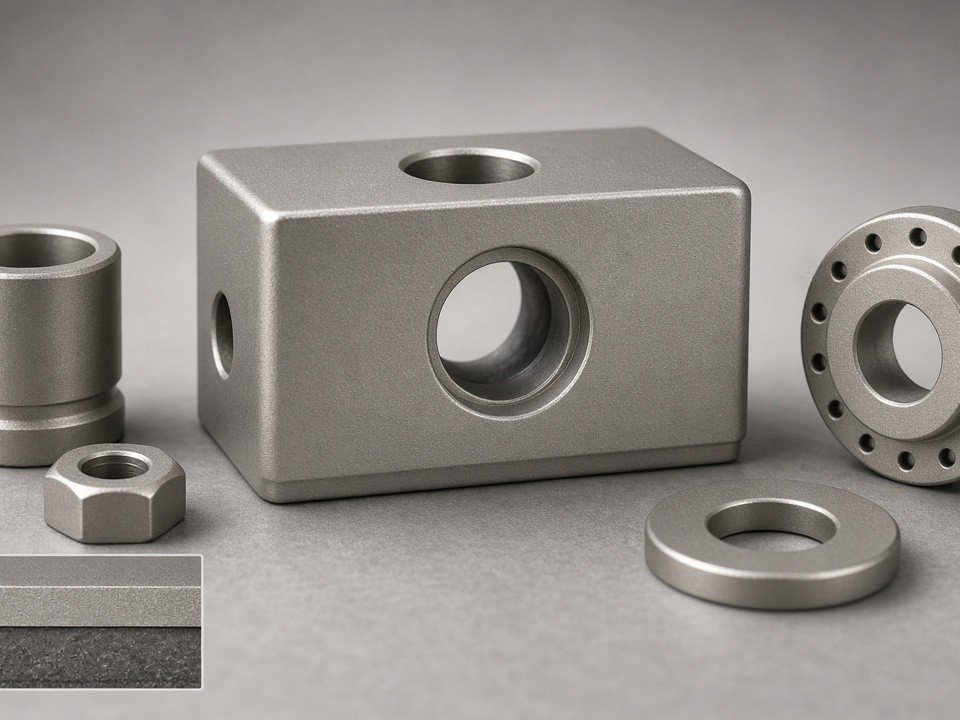
50+
Proven manufacturing partners
10
Manufacturing engineers
Dongguan-based team with more than 10 years of industry experience, coordinating machining, finishing, quality requirements, and delivery.
Process fundamentals
Coordinate the coating with the part design
Coverage across complex surfaces
Electroless nickel is deposited through a chemical, autocatalytic process rather than an external electrical current. It can be useful when relatively uniform coverage is needed across edges, contours, and recessed features. Geometry, surface preparation, bath conditions, and cleaning access all affect the result, so deep or restricted cavities should be reviewed individually.
Specification based on function
Corrosion resistance, wear performance, hardness, appearance, and dimensional limits can influence the coating choice. We assess these requirements alongside the base material and functional surfaces rather than treating plating as an isolated finishing step.
Coordinated service
From engineering review to finished part
We support custom components across CNC milling and turning, sheet metal fabrication, injection molding, and other manufacturing methods. That broader capability helps us coordinate parts and assemblies involving multiple suppliers or processes.
Discuss your part requirements-
01
Engineering and drawing review
Identify critical dimensions, mating features, surface requirements, and areas that may need masking or special handling.
-
02
Process and supplier matching
Match the project with suitable machining and finishing capabilities from our network of 50+ proven manufacturing partners.
-
03
Machining and plating coordination
Align the machining plan with coating allowance, plating sequence, and required final dimensions.
-
04
Secondary operations and delivery management
Coordinate agreed inspection, assembly, packaging, production updates, and delivery requirements with the selected partner.
Dimensional control
Coating thickness, tolerances, and fit
Electroless nickel adds material to plated surfaces. Even a controlled coating thickness can affect a press fit, sliding surface, thread, bore, shaft, sealing face, or other dimensionally sensitive feature. For close-tolerance parts, coating specifications and machining dimensions need to be considered together.
Share the required coating thickness or specification where available, along with finished-part tolerances. If details are not defined on the drawing, we can flag open questions before production for confirmation with your engineering team and the selected plating partner.
What we review together
- Dimensions defined before plating versus after plating
- Mating features that may need masking or machining allowance
- Threads, bores, and slots where buildup could affect assembly
- Surfaces to coat and surfaces to leave uncoated
- Inspection points and finished-part acceptance requirements
- Whether post-plating machining or another secondary operation is appropriate
Application review
Choose the right specification for the job
Electroless nickel is worth evaluating when complex surfaces, consistent coverage, or defined corrosion and wear requirements matter. It is not the right choice for every application: base material, operating environment, coating properties, dimensional limits, and total cost all play a part. We do not assume one process suits every design.
Part geometry
Surface access, recesses, holes, and masking needs.
Material
Base-metal compatibility and preparation requirements.
Function
Corrosion, wear, hardness, appearance, and performance needs.
Dimensions
Coating buildup on fits, threads, bores, and reference surfaces.
Volume and lifecycle
Prototype needs, repeat orders, and production expectations.
Schedule and cost
Manufacturing sequence, finishing lead time, and delivered cost.
Where appropriate, we can discuss alternative finishing or manufacturing approaches based on your part requirements.
Project workflow
From machined component to finished part
Plating decisions are most effective when reviewed before machining is complete. We coordinate the sequence and requirements across the manufacturing and finishing partners involved.
01 / Review
Assess files and requirements
Review drawings, 3D models, material, quantity, critical dimensions, and finish expectations.
02 / Define
Resolve coating details
Identify coating thickness, masking, inspection, and post-processing questions that may affect the design or quote.
03 / Match
Select manufacturing resources
Match partners based on process capability, quality needs, capacity, lead time, and project fit.
04 / Coordinate
Manage production and delivery
Align machining and finishing, coordinate specified checks and documentation, and arrange packaging and shipment.
Certification availability, inspection records, material traceability, and other documentation depend on the selected manufacturing partner and agreed project requirements. Applicable scope is confirmed during project review.
Prepare your RFQ
Share your drawing for a project review
For a useful quotation, send as much of the following as you have:
- 2D drawings and 3D CAD files
- Base material and material condition
- Coating specification or required thickness
- Critical dimensions and tolerances
- Areas to mask or leave uncoated
- Quantity, target lead time, and reorder frequency
- Corrosion, wear, or operating-environment requirements
- Inspection or documentation needs
One team to coordinate your supply chain
We support overseas B2B companies sourcing high-mix, low- to medium-volume custom parts from China. Work with one BGCNC team as we coordinate engineering, manufacturing partners, finishing, quality requirements, and delivery.
Email: info@bgcnc.com
Address: Hongrongyuan · Honghu-Technologiepark, Bezirk Longhua, Shenzhen, China
Common questions
Electroless nickel plating FAQs
Is electroless nickel suitable for complex parts?
It can be a good option when consistent coverage across complex surfaces is important. Geometry, cleaning access, and processing conditions still affect the result, so we review recessed features and restricted areas before confirming suitability.
Will plating change my part dimensions?
Yes. Electroless nickel adds coating thickness to plated surfaces. The effect on a finished dimension depends on thickness, coverage, masking, and feature geometry. We review fit-critical dimensions alongside the machining plan.
Can you plate only selected areas?
Selective plating may be possible when the specification and part design allow suitable masking. Identify the surfaces to coat and those to leave uncoated on your drawing or in the RFQ so the manufacturing partner can assess them.
Can you coordinate both CNC machining and electroless nickel plating?
Yes. We coordinate CNC machining and plating through suitable partners in our manufacturing network, with attention to process sequence, coating requirements, dimensional impact, and agreed inspection needs.
What information do you need to quote?
Send your drawing or 3D model, material, quantity, coating specification, critical tolerances, and target schedule. If some details are not finalized, we can identify what is needed to assess the project.
Request a quote
Let’s review your part and plating requirements
Share your drawings, quantities, material, coating specification, and critical dimensions. Our team will review the manufacturing and finishing requirements together and follow up on any open technical details.